

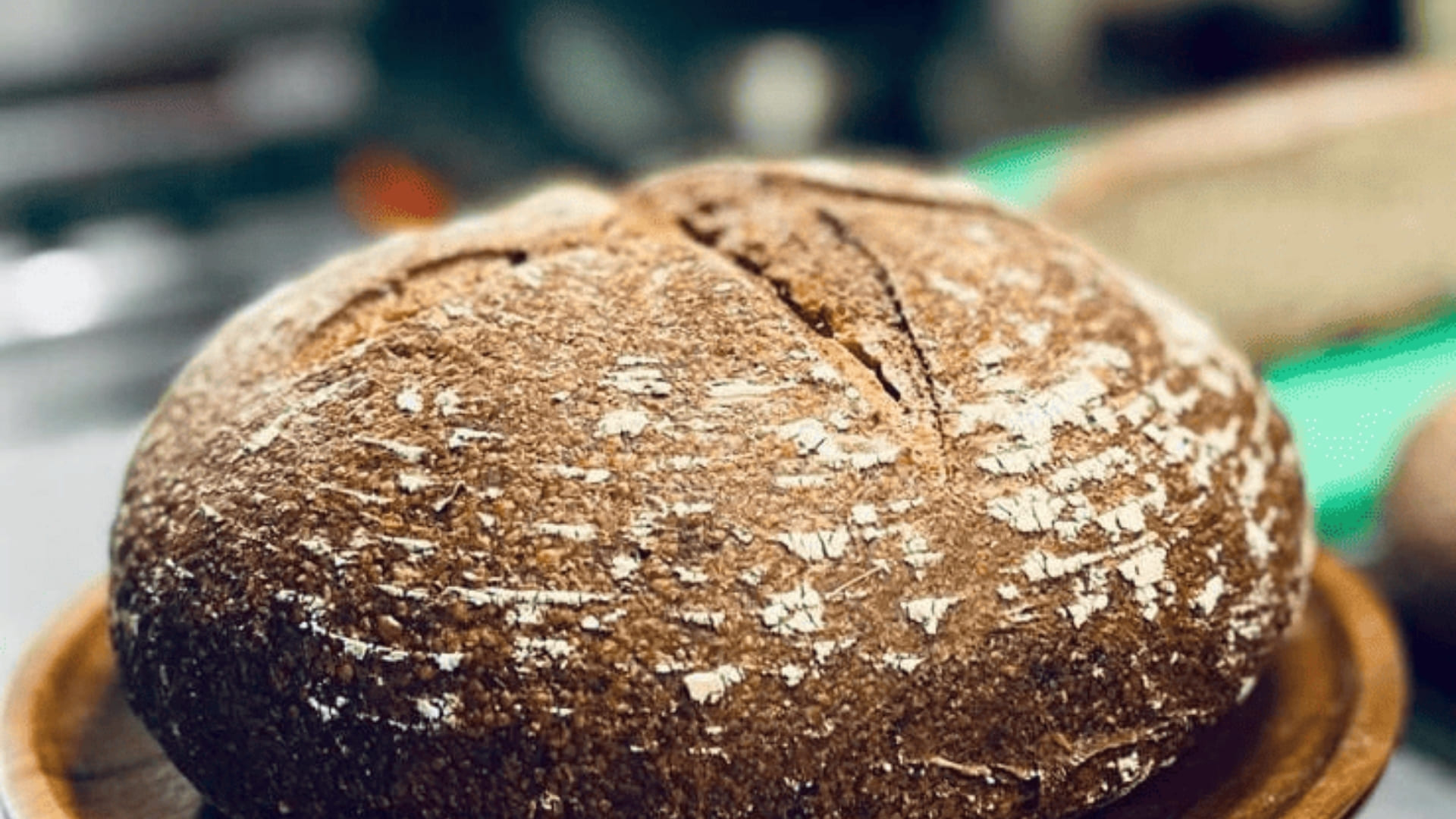
The first time I made this bread, I did not know exactly how it would turn out. I only knew that I had whey left over from making cheese, wholemeal flour in the cupboard, and no hurry. Sometimes that is all you need.
Whey — an ingredient with memory
Whey bread has its roots in traditional cooking, where nothing was wasted. Whey, left over from cheesemaking, found its way naturally into the dough — not out of thrift, but because people sensed it did something good there. And it does. Its delicate acidity balances the yeast, a fine milky note comes through in the crumb, and the crust takes on a slightly deeper, warmer caramelisation than usual.
Wholemeal flour — the honesty of the whole grain
Wholemeal flour completes this construction with honesty. The wheat grain stays whole — with its bran, its germ, everything it has to offer. The aroma is richer, slightly nutty, and the structure denser, yet balanced. This is not a bread that tries to be light. Rather, it is a bread that tries to be real.
Time — the ingredient that is not on the list
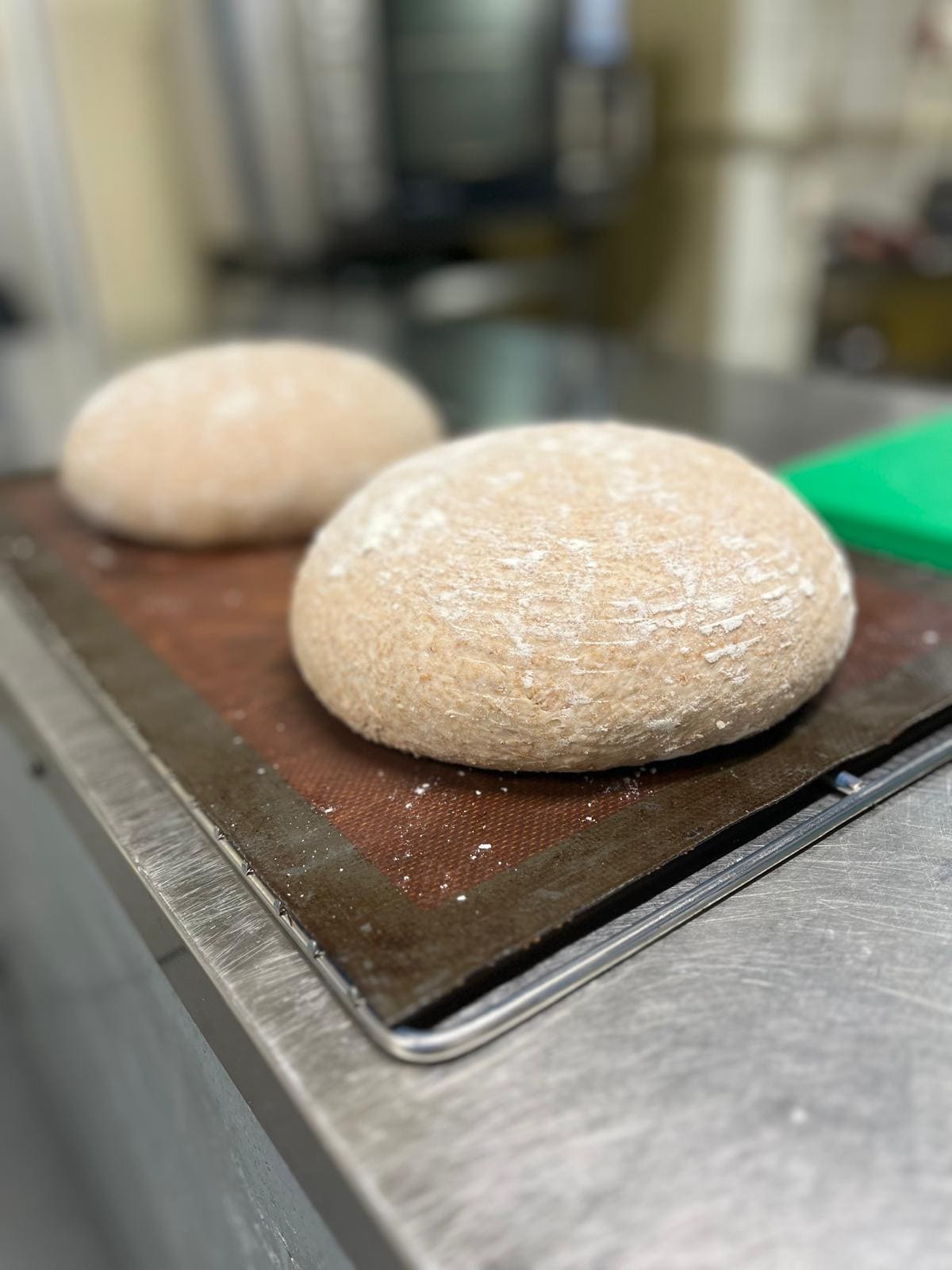
Slow proving — a few hours at room temperature or a night in the fridge — is not a luxury technique. It is a condition. In those hours, the flavours build layer by layer, the gluten relaxes and the starch begins to be naturally pre-digested. The result is an unhurried bread — and it tastes exactly like that.
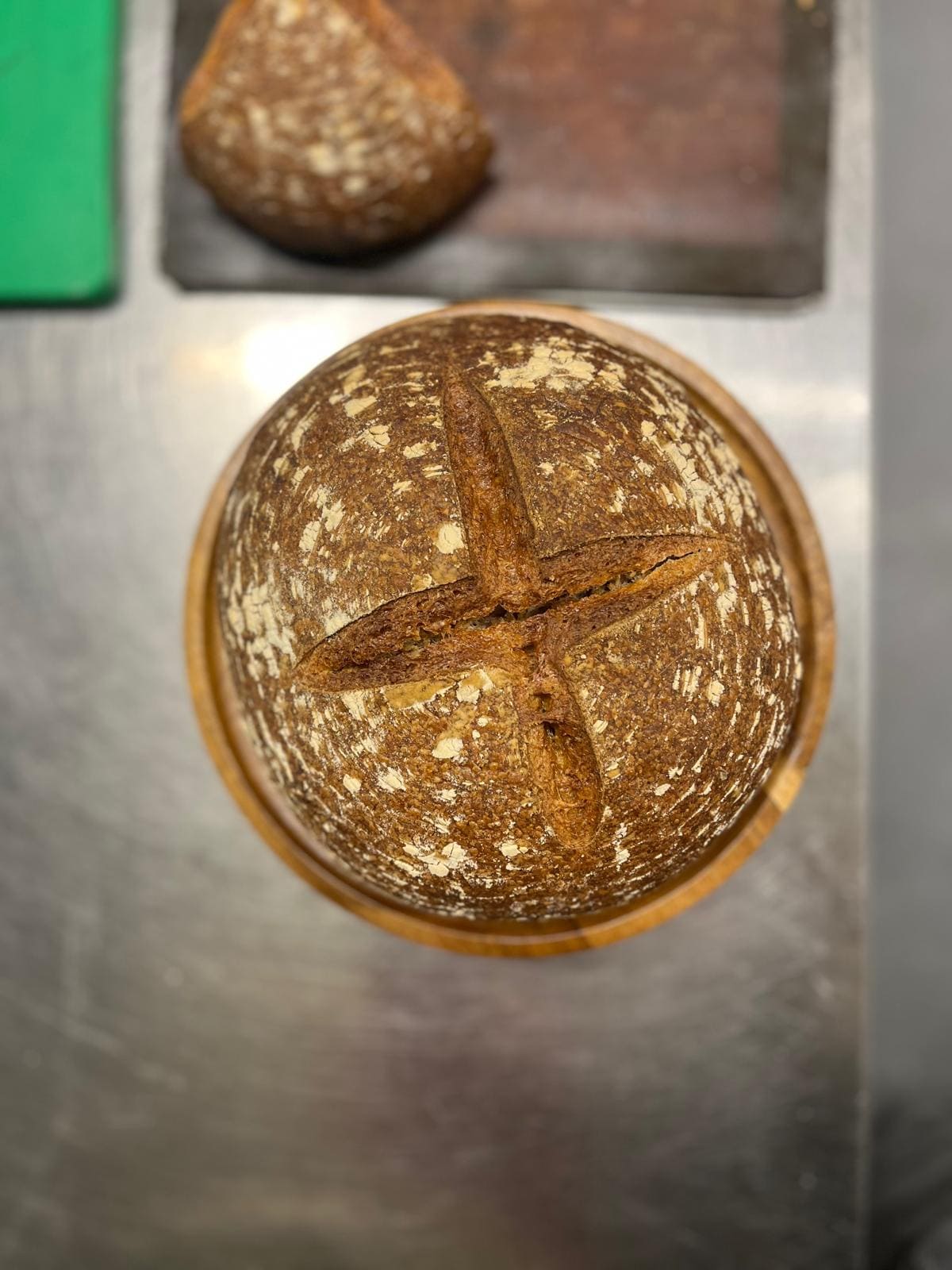
The crust comes out crisp and lightly caramelised. The crumb stays moist, with irregular holes and a complex aroma in which the fine acidity of the whey intertwines with the depth of the wholemeal flour. Nothing dominates. Everything accompanies.
It is the kind of bread you make once and then understand why it is worth the wait.
If you would like to taste it before you bake it, you will find it at Sens (formerly Gallo Bistro) in Baia Mare. The whey bread comes to the table at the start — not as a token appetiser, but as a first sign of how we think about food here.